1. What Is Cyanoacrylate Adhesive?
Cyanoacrylate (CA) is a fast-curing, single-component adhesive that bonds within seconds when exposed to surface moisture. Commonly known as "super glue" or "instant adhesive," industrial-grade cyanoacrylates are formulated for precision bonding of metals, plastics, rubber, ceramics, wood, and leather.
Unlike hot melt adhesives, cyanoacrylates cure through a chemical reaction (anionic polymerization) rather than cooling - meaning they form a permanent, rigid bond that cannot be re-melted.
2. How Cyanoacrylate Cures (The Science)
Cyanoacrylate monomers polymerize when they come into contact with hydroxyl ions (OH?) present in atmospheric moisture and on most substrate surfaces. This is why CA adhesives:
- Cure faster when the air or surface is humid
- Cure even faster on slightly acidic surfaces like skin
- Cure more slowly on naturally acidic wood species like oak or teak
- Bond best with thin, tight-fitting joints - thick gap-filling reduces strength
3. Viscosity Grades: 2 cps to 3000 cps
Viscosity is the single most important specification when selecting a cyanoacrylate for industrial use. It determines flow behavior, open time, and what substrates and joint configurations the adhesive is suitable for.
| Viscosity | Consistency | Best Applications | Typical Cure Time |
|---|---|---|---|
| 2-5 cps | Water-thin | Wicking into hairline cracks, porous materials, bonding wood or paper from the back | 5-10 sec |
| 20-100 cps | Light liquid | Rubber bonding, plastics, electronics, general industrial (most versatile) | 10-30 sec |
| 200-500 cps | Medium gel | Vertical surfaces, porous substrates, foam bonding, footwear sole repairs | 15-45 sec |
| 1000-3000 cps | Heavy gel | Gap-filling (up to 0.5mm), ceiling and overhead application, non-drip requirement | 30-90 sec |
4. Surface Compatibility Guide
| Substrate | CA Performance | Recommended Viscosity | Notes |
|---|---|---|---|
| Metal (steel, aluminium) | ????? Excellent | 20-100 cps | Clean, degrease surface first |
| Rubber / EPDM | ????? Excellent | 100-500 cps | Best CA application in footwear |
| Rigid Plastics (ABS, PC) | ???? Very Good | 20-200 cps | Avoid on polypropylene without primer |
| Wood (hardwood) | ???? Very Good | 2-20 cps (wicking) | Avoid on acidic woods; use activator |
| Ceramics / Glass | ??? Good | 20-100 cps | Very clean, dry surface required |
| Foam / Porous materials | ??? Good | 500-1000 cps | Low-viscosity will absorb; use gel |
| Polyethylene / PP | ? Poor | Primer required | Surface activator (primer) mandatory |
5. Industrial Applications
Footwear Manufacturing
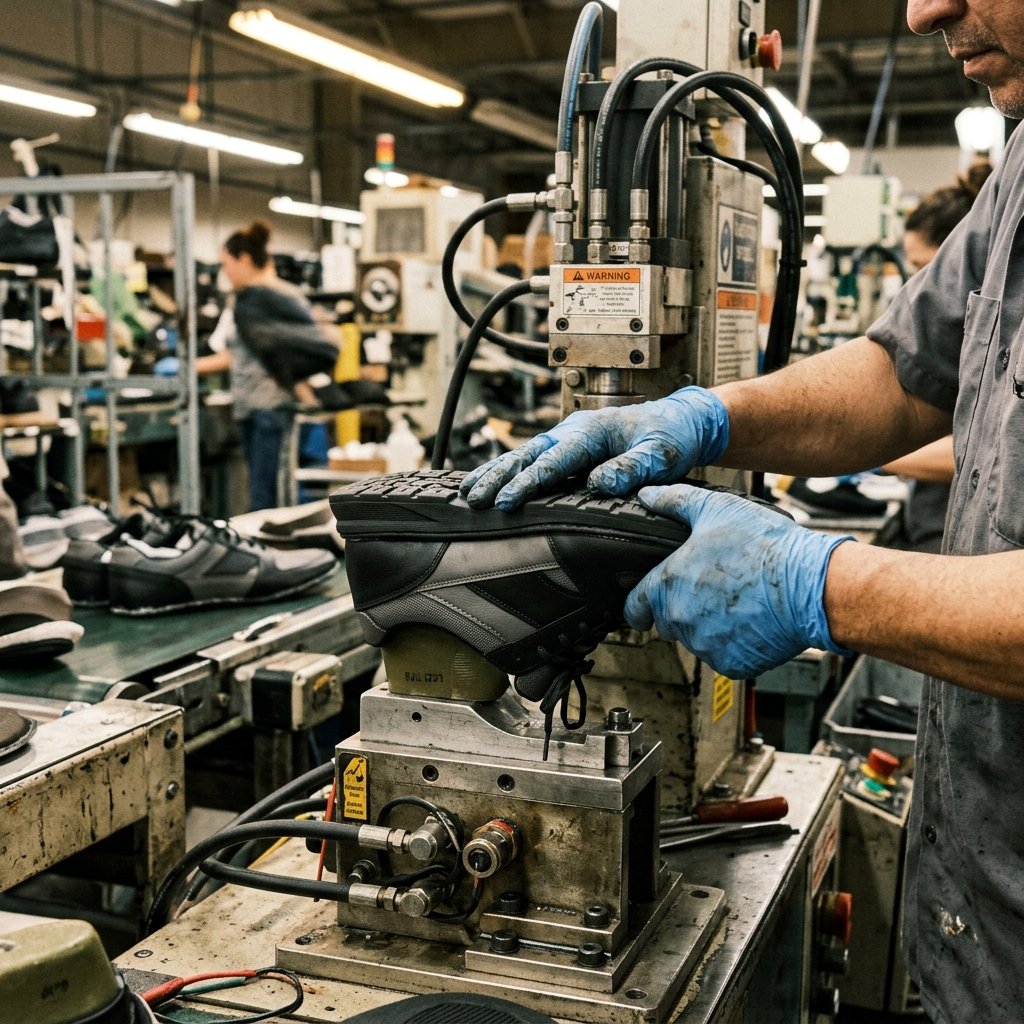
High-viscosity CA gels are widely used for sole-to-upper bonding, leather repairs, and heel counter attachment. The instant set time eliminates the need for jigs and clamps, dramatically improving production throughput.
Electronics & Precision Assembly
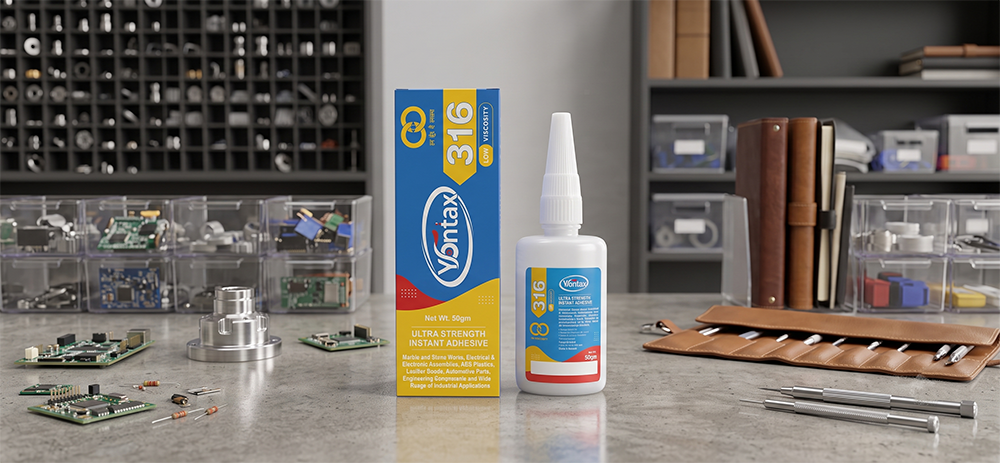
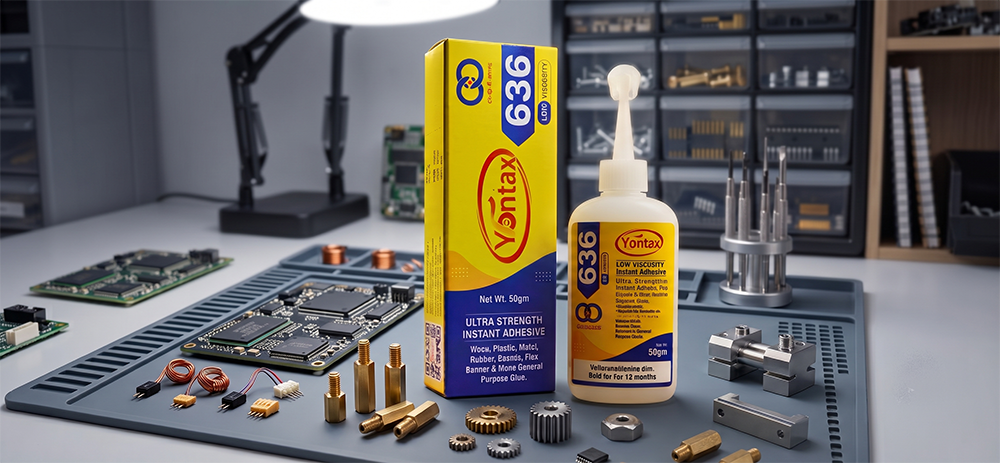
Low-viscosity wicking grades bond components, wires, and connectors in electronics - the thin consistency allows capillary action to draw adhesive into tight spaces.
Woodworking & Furniture Repair
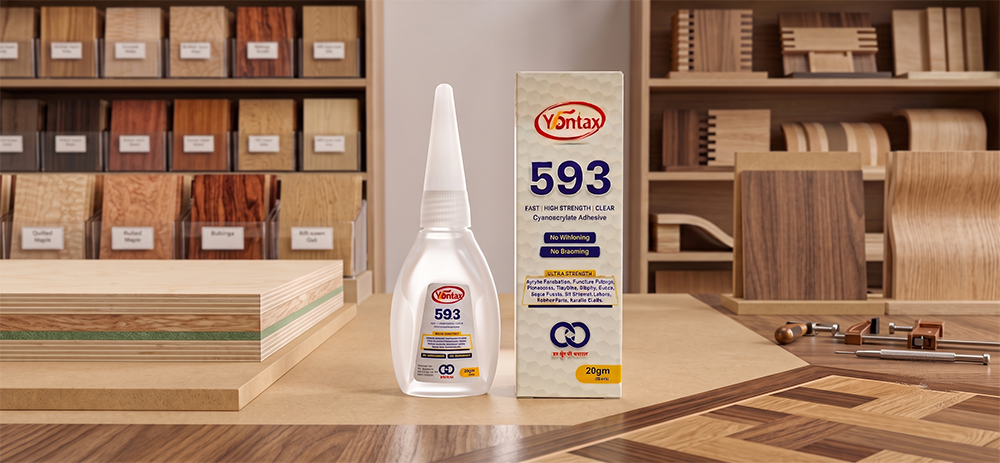
CA adhesives with accelerators are used for fast joint repairs, veneer edge bonding, and wooden bead assembly. The ultra-fast cure eliminates clamping time.
General Industrial Bonding
Rubber gaskets, plastic housings, nameplate attachment, and sensor mounting in automotive and appliance manufacturing all rely on medium-viscosity CA grades.
6. How to Select the Right Grade
- Tight, close-fitting joints? → Low viscosity (2-20 cps) for capillary wicking
- Vertical or overhead surface? → High viscosity gel (500-3000 cps) to prevent running
- Porous substrate (foam, wood)? → Medium-high gel to avoid excessive absorption
- Need fastest possible cure? → Use an activator/accelerator spray alongside any grade
- White blooming/fogging concern? → Use low-bloom grades formulated for transparent/optical applications
7. Yontax Cyanoacrylate Range
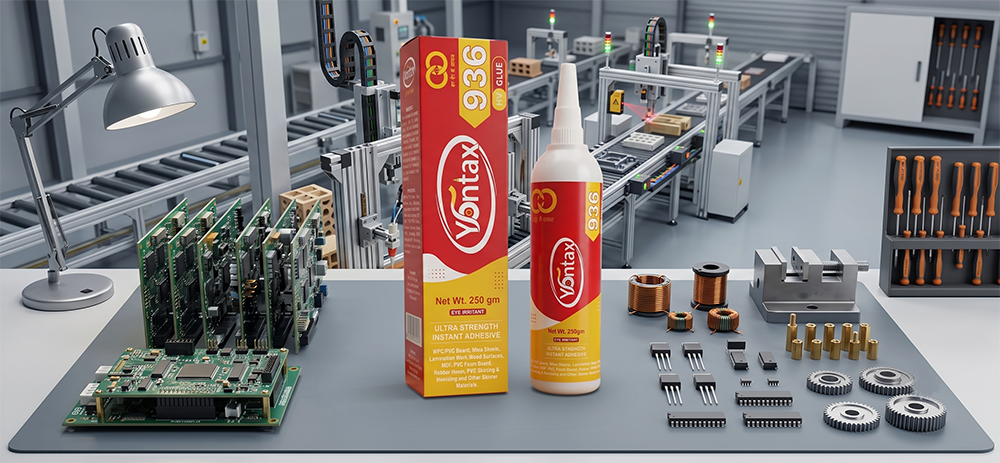
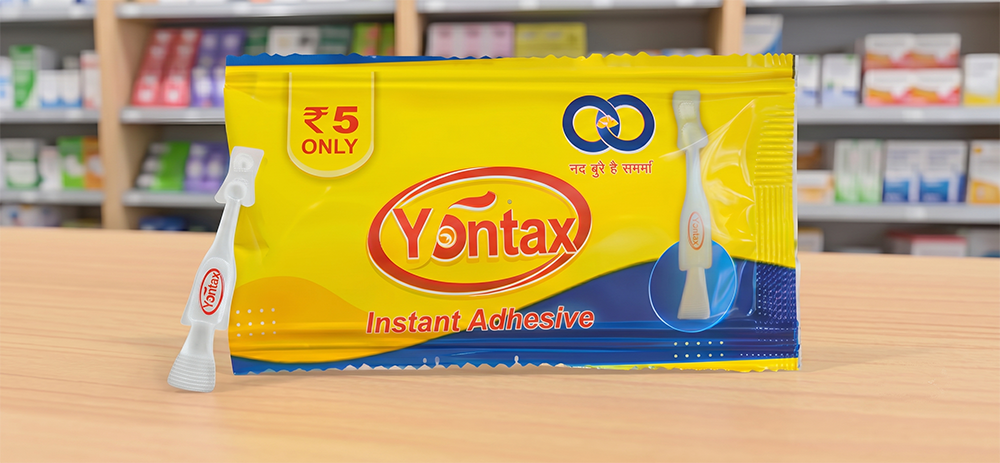
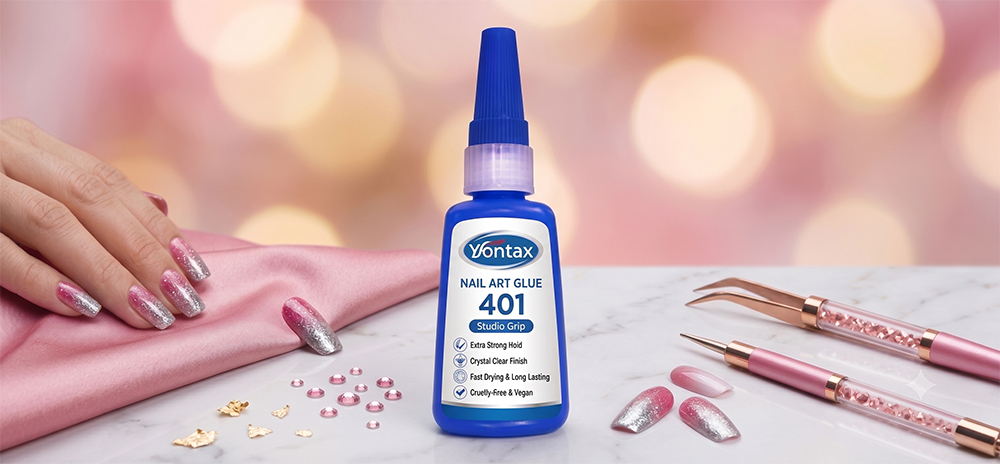
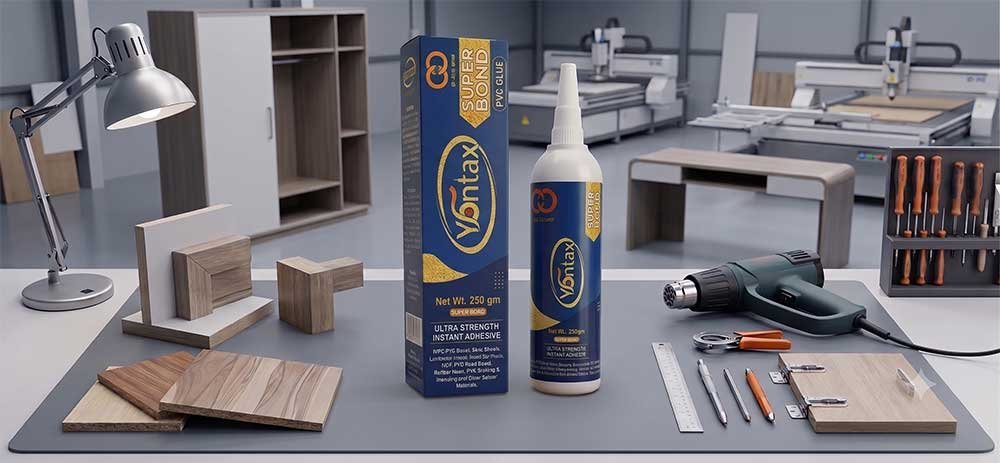
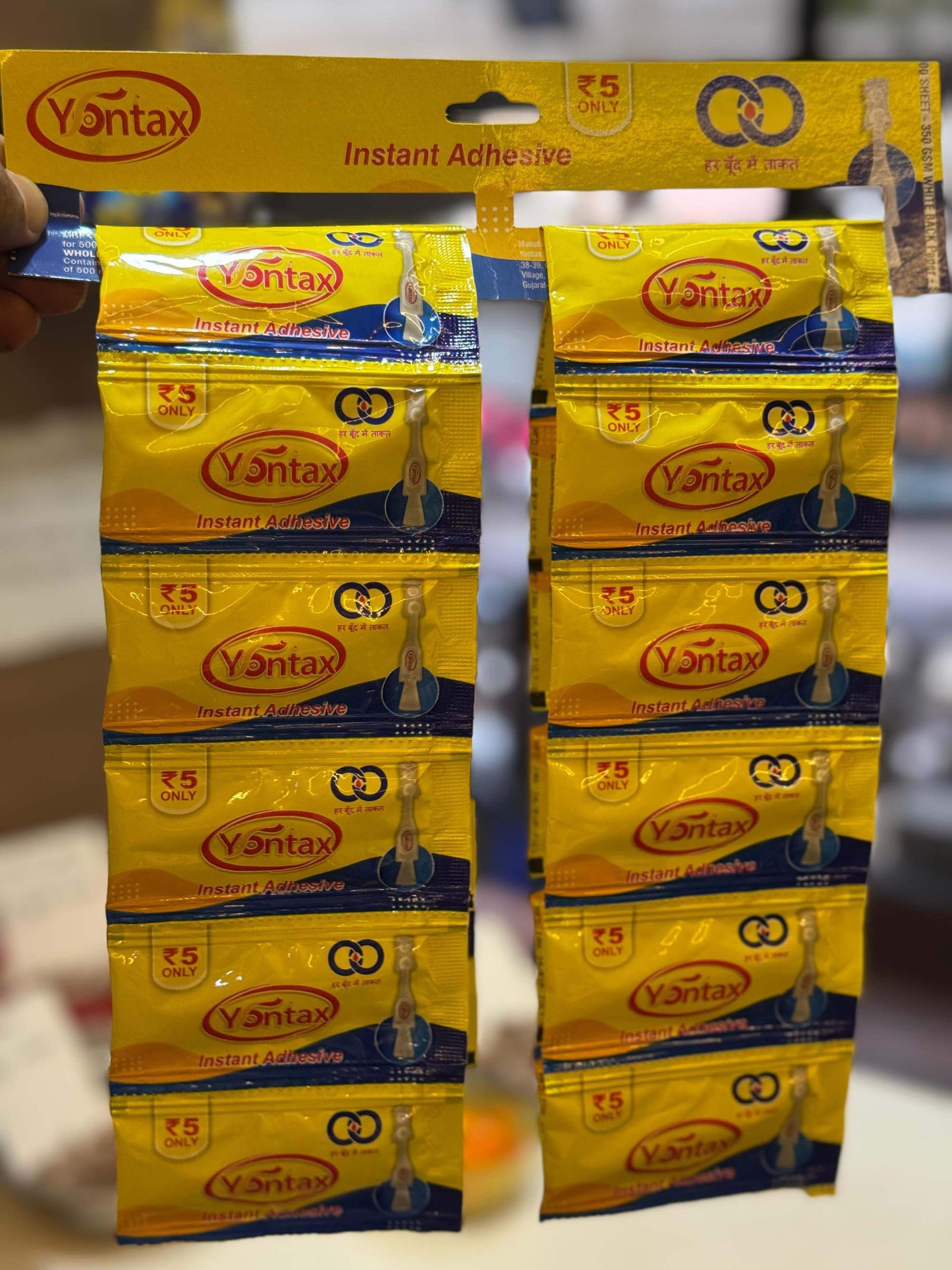
Our Yontax brand offers a complete range of industrial cyanoacrylate adhesives in different viscosity grades for every application: