1. Why Standard Super Glue Leaves White Haze on Acrylic
Every acrylic fabricator and trophy maker has experienced the frustration of bonding two crystal-clear PMMA acrylic sheets, only to return an hour later and find a cloudy, chalky white halo surrounding the joint line. In adhesive chemistry, this defect is called blooming or frosting.
Standard ethyl cyanoacrylate monomers have relatively high vapor pressure. During curing, unpolymerized monomer vapor rises from the wet adhesive bead, reacts with atmospheric humidity, and settles back onto nearby glossy surfaces as a micro-crystalline white polymer dust. On matte wood or metal, this haze goes unnoticed; on transparent acrylic, black ABS helmet visors, or polished awards, it turns a finished product into scrap.
2. How Zero-Whitening Formulations Solve Blooming
A zero-whitening (anti-blooming) cyanoacrylate minimizes volatile monomer evaporation during cure while accelerating surface polymerization along the joint seam. Instead of fuming outward into the air, the adhesive locks tightly inside the bond line and cures into an optically clear film.
3. Why 100 CPS Viscosity Matters for Channel Letters & Vertical Seams
Water-thin 2–5 cps instant glues run uncontrollably down vertical acrylic returns, ruining LED diffuser panels. Heavy 1,500+ cps gels, on the other hand, leave thick visible beads inside clear display cases. A controlled 100 CPS gel-transparent viscosity hits the engineering sweet spot for fabrication shops:
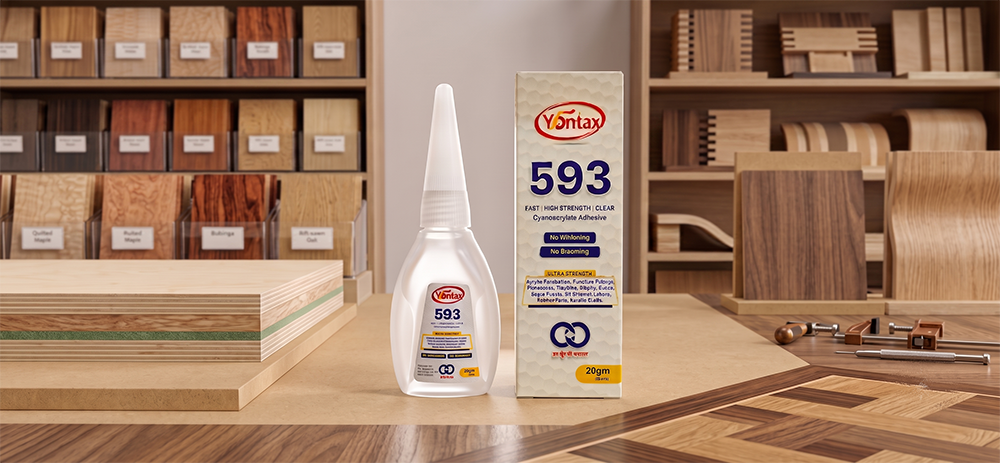
| Parameter | Standard Low-Viscosity CA | Yontax 593 (Zero-Whitening) |
|---|---|---|
| Viscosity | 2–20 cps (runny liquid) | 100 CPS (controlled flow) |
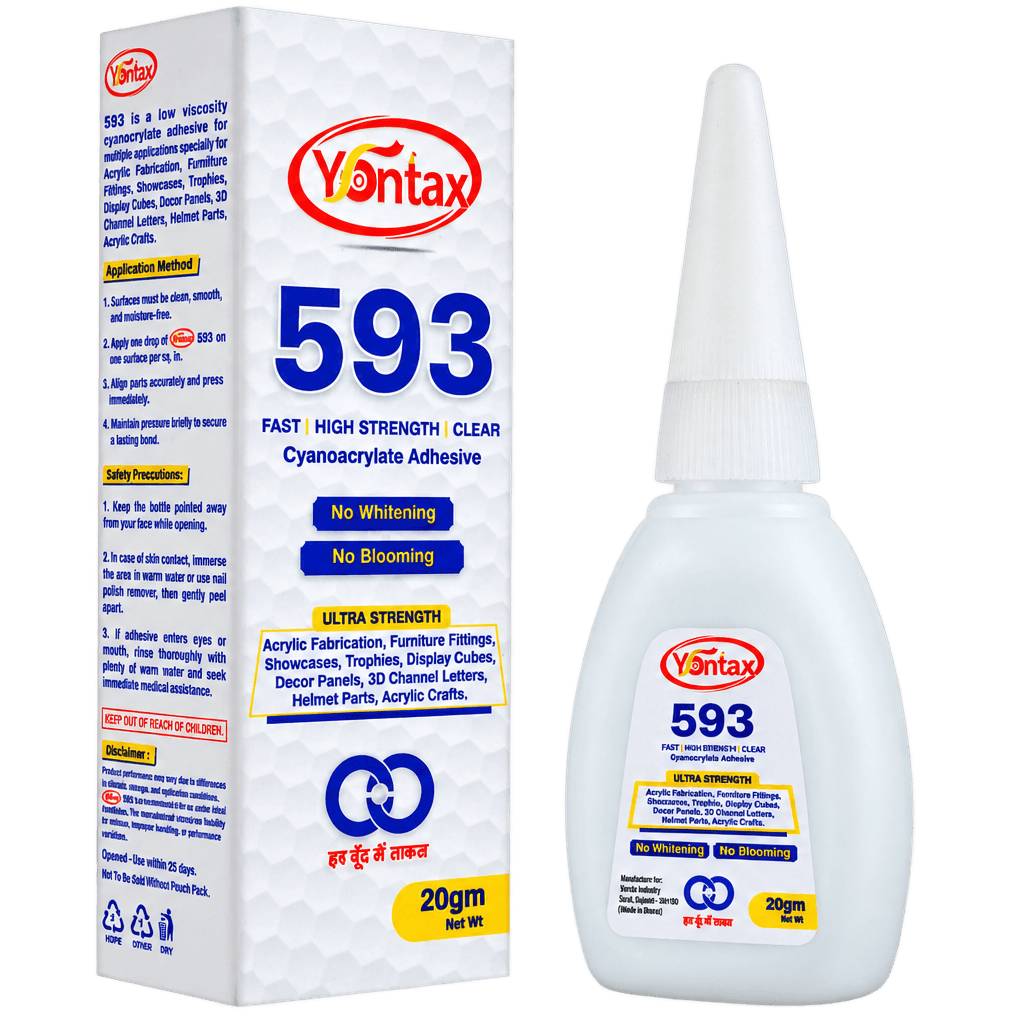
| Fixture Speed | 5–15 seconds | 5 seconds rapid fixture |
| Optical Finish | Prone to white blooming haze | Optically clear, zero whitening |
| Vertical Seam Control | Drips down vertical acrylic walls | Stays put along returns & corners |
| Precision Dispensing | Standard stub tip | Extended precision nozzle pipe |
4. Key Industries: Signage, Trophies, Helmets & Crafts
- 3D Acrylic Channel Letters & LED Signage: Fast corner tacking and seam sealing between acrylic faces and PVC/acrylic returns without fogging LED light output.
- Crystal-Clear Trophies, Awards & Display Cases: Seamless transparent bonding on laser-cut acrylic plaques, museum boxes, and retail POS stands.
- Helmet Visor Trim & Automotive Accessories: Clean bonding on glossy polycarbonate, ABS, and painted trims where chalk marks are unacceptable.
- Ceramics, Leather & Precision Repairs: High-strength hold on porcelain, finished leather, and dark decorative hardware without leaving white rings.
5. Workshop Application Checklist for Crystal-Clear Joints
- Dry-fit first: Confirm laser-cut acrylic edges sit flush with minimal gap (<0.1 mm) before dispensing.
- Clean with isopropyl alcohol (never acetone): Wipe away finger oils and static dust, then let the surface dry completely. Avoid acetone on acrylic because it causes stress crazing.
- Use the extended precision pipe: Dispense a thin, continuous micro-bead along the seam rather than over-applying. Excess adhesive slows cure and wastes material.
- Maintain mild airflow: Gentle cross-ventilation in the assembly booth clears any trace moisture vapor immediately.
- Allow 24 hours for full structural cure: Parts can be handled after the 5-second fixture, while full load-bearing strength develops over 24 hours.
6. Recommended Yontax Products